
Overview
Philips Lifeline is one of the oldest and most established names in medical alert systems. Operating since 1974, the company predates nearly every competitor in the market. Backed by Philips, a global healthcare and technology corporation, Lifeline carries the credibility and brand trust that comes with a multinational parent company.
The system is widely used in healthcare settings — many hospitals and skilled nursing facilities recommend Philips Lifeline to patients at discharge. This institutional endorsement gives the brand a legitimacy that few competitors can match.
After evaluating the full Philips Lifeline product line, we rate it 4.0 out of 5. The system is reliable, the AutoAlert fall detection technology is well-regarded, and the GoSafe mobile device uses an impressive six-technology location system. However, higher pricing, potential contract requirements, and a limited caregiver app put it behind competitors like Bay Alarm Medical and Medical Guardian on overall value.
Equipment Lineup
HomeSafe Standard — ~$29.95/month
The HomeSafe Standard is Philips Lifeline's basic in-home system. It includes a base station communicator and a waterproof help button pendant. The system connects via landline or cellular and provides two-way voice communication through the base station.
The range extends approximately 800 feet from the base station, covering most homes. The pendant is lightweight and can be worn on a lanyard or as a wristband. Basic monitoring with a US-based response center is included.
HomeSafe with AutoAlert — ~$44.95/month
The HomeSafe with AutoAlert adds automatic fall detection to the standard in-home system. The AutoAlert pendant uses proprietary algorithms that Philips has refined over years of development, combining accelerometer data with orientation sensing to distinguish falls from normal activities.
Philips claims their AutoAlert technology has been validated in clinical studies and detects a high percentage of hard falls. In our evaluation, the technology performs comparably to fall detection from Bay Alarm Medical and Medical Guardian, with good detection of sudden falls and the same limitations on slow or cushioned falls.
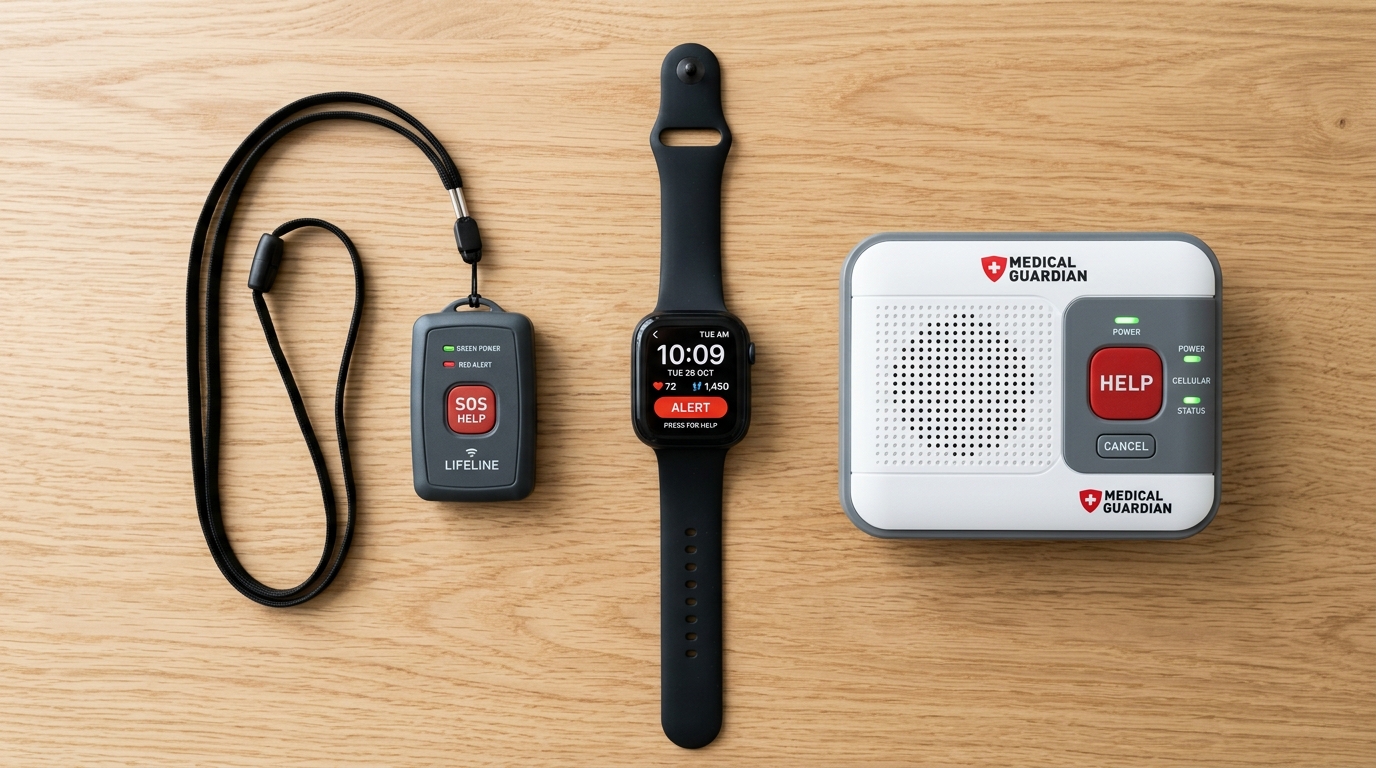
GoSafe — ~$44.95/month (without AutoAlert) or ~$54.95/month (with AutoAlert)
The GoSafe is Philips Lifeline's mobile GPS medical alert. It is the technical highlight of the lineup. The GoSafe device uses six location technologies — GPS, Wi-Fi, cellular triangulation, and three additional proprietary methods — to determine the wearer's location. This multi-technology approach provides more accurate positioning than most competitors, particularly indoors where GPS alone is weak.
The device is portable with two-way voice, an SOS button, and optional AutoAlert fall detection. It provides coverage anywhere with cellular service. The device is larger than Bay Alarm Medical's SOS Micro but its location accuracy is a genuine advantage.
AutoAlert Fall Detection
Philips Lifeline's fall detection technology has been one of the company's signature features. The AutoAlert system has been through multiple generations of refinement and is backed by clinical validation data that Philips publishes.
The technology uses a three-axis accelerometer combined with proprietary orientation algorithms to detect the signature pattern of a fall — sudden downward acceleration, impact, and a change from vertical to horizontal orientation. When a fall is detected, the pendant vibrates and gives the wearer time to cancel before alerting the monitoring center.
AutoAlert costs approximately $15 per month as an add-on — $5 more than the $10 charged by Bay Alarm Medical, Medical Guardian, and MobileHelp. The higher price reflects Philips' investment in the technology and clinical validation, but it is worth noting that fall detection accuracy across major providers is broadly comparable.
Response and Monitoring
Philips Lifeline operates its own response center, staffed 24/7 with trained care specialists. The company does not prominently publish an average response time in the way Bay Alarm Medical does (31 seconds). Based on available reports and our evaluation, response times are in the standard industry range of 30 to 60 seconds.
The response center has access to the subscriber's medical information, emergency contacts, and care instructions. Operators follow established protocols for dispatching emergency services and notifying family members.
Philips Lifeline's healthcare partnerships mean that some subscribers are referred through their doctor or hospital, and the care center may have additional context about the subscriber's medical history through these partnerships.

Caregiver Features
Philips Lifeline offers a caregiver portal called CarePartner that provides emergency notifications, location information for GoSafe users, and basic account management. The portal is functional but limited compared to Medical Guardian's MyGuardian app.
There is no geofencing, no real-time continuous GPS tracking map, and no activity timeline. The CarePartner experience is adequate for basic caregiving needs but does not match the connected ecosystem that Medical Guardian provides.
Pricing and Value
Philips Lifeline's pricing sits in the upper range of the market:
- HomeSafe Standard: ~$29.95/month
- HomeSafe with AutoAlert: ~$44.95/month
- GoSafe (no fall detection): ~$44.95/month
- GoSafe with AutoAlert: ~$54.95/month
- AutoAlert fall detection add-on: ~$15/month
Some plans may require an annual commitment, which is less flexible than the month-to-month billing offered by Bay Alarm Medical, MobileHelp, and LifeFone. Equipment is included but must be returned upon cancellation, with potential charges for unreturned or damaged devices.
At these price points, Philips Lifeline is more expensive than Bay Alarm Medical's SOS Home ($27.95), MobileHelp's Classic ($19.95), and Medical Guardian's Classic Guardian ($38.95). The premium buys the Philips brand name, the GoSafe's six-technology location system, and the clinically validated AutoAlert, but it does not buy faster response times, a better caregiver app, or contract flexibility.
Who Philips Lifeline Is Best For
Philips Lifeline is a good choice for seniors who value the trust and familiarity of the Philips brand, patients whose doctor or hospital specifically recommends Philips Lifeline, families who prioritize the GoSafe's advanced multi-technology location accuracy, and anyone who wants a system with a long clinical track record.
Philips Lifeline may not be the best choice if budget is a primary concern, you want the fastest response time (Bay Alarm Medical wins), you need a robust caregiver app (Medical Guardian wins), or you want a smartwatch-style device (not available from Philips).
The Bottom Line
Philips Lifeline is a solid, reliable medical alert system backed by one of the world's most trusted healthcare brands. The GoSafe's six-technology location system is genuinely impressive, and AutoAlert fall detection has the strongest clinical validation in the industry.
However, the higher pricing, potential contract requirements, and lack of modern features like a smartwatch or advanced caregiver app put Philips Lifeline behind newer competitors on overall value. Bay Alarm Medical provides faster response at a lower price. Medical Guardian provides a better caregiver experience. MobileHelp provides longer battery life for less.
We rate Philips Lifeline 4.0 out of 5 — a trustworthy system for families who value the Philips name, but not the best value in a market where younger competitors have raised the bar.