
Why Scammers Target Medical Alert Buyers
Medical alert scams are among the most common frauds targeting seniors and their families. Scammers exploit the emotional urgency around safety — the fear that a loved one could fall and have no way to get help — to pressure people into giving up personal information or paying for services that are substandard or nonexistent.
The Federal Trade Commission receives thousands of complaints about medical alert scams each year. Understanding how these scams work is the best defense against falling victim to one.
The Most Common Medical Alert Scams
1. The Unsolicited Phone Call
This is the most widespread medical alert scam. You or your parent receives an unsolicited phone call from someone claiming to represent a medical alert company, a government program, or Medicare. The caller may say the senior has been "approved" for a free medical alert system, claim that Medicare is now covering medical alert systems (it is not), say they are calling from a doctor's office or hospital to set up a medical alert, or use high-pressure tactics demanding an immediate decision.
How to respond: Hang up. Do not press any buttons, do not confirm your name or address, and do not provide any financial information. Legitimate medical alert companies do not cold-call seniors. Medicare does not call to offer free medical devices.
2. The "Free" System Bait
Some companies advertise a completely free medical alert system to lure customers. Once the person signs up, they discover the system requires a long-term contract with monthly monitoring fees, there are activation fees, equipment fees, or shipping charges, cancellation requires returning equipment at the customer's expense with penalties, and the "free" device is a low-quality unit with unreliable monitoring.
The truth: There is no such thing as a free professionally monitored medical alert system. Monitoring centers cost money to operate — staffing, technology, facilities, and certifications. A company claiming to offer free monitoring is either hiding fees or not actually providing professional monitoring.
3. The Fake Government Program
Scammers sometimes claim to represent Medicare, Medicaid, the Social Security Administration, or the VA, saying the senior has been selected for a government-sponsored medical alert program. They request personal information — Social Security numbers, Medicare numbers, bank details — under the guise of enrollment.
The truth: No federal program calls seniors to offer free medical alert systems. Medicare does not cover standard medical alert systems. If someone claims a government agency is calling about a medical alert, it is a scam.
4. The Bait-and-Switch Subscription
Some companies offer an attractive introductory rate — $9.95 per month, for example — then significantly increase the price after a few months or bury the real price in contract fine print. The initial rate is a marketing hook, and the actual cost may be comparable to or higher than reputable competitors.
How to spot it: Read the full terms before signing up. Ask specifically: "What will my monthly cost be in six months? In a year? Are there any automatic price increases?" Reputable companies offer consistent, transparent pricing with no introductory bait.
5. The Hard-Sell Door-to-Door Visit
Some operations send representatives door-to-door in senior communities, offering free demonstrations and applying aggressive sales pressure. The representative may claim they need to act today because the offer expires, demand credit card information before the demonstration is over, or misrepresent the contract terms and cancellation policy.
How to respond: Never give financial information to someone who shows up at the door uninvited. Ask for written materials and their company name, then research the company independently before making any decision.

Red Flags to Watch For
Treat any of the following as warning signs.
No published pricing. If you cannot find the monthly cost on the company's website, be cautious. Legitimate companies are transparent about pricing.
Required long-term contract. The industry standard is month-to-month billing. A 2-or-3-year contract requirement benefits the company, not the customer.
Upfront equipment fees over $100. The best providers include equipment at no charge. Large upfront fees are a sign of either overpricing or a scam.
No verifiable monitoring center. The monitoring center should be UL-listed and Five Diamond-certified. If the company cannot provide this information, their monitoring may not meet professional standards.
No physical address or vague company information. Legitimate companies have a verifiable physical address, a customer service phone number that real people answer, and a history that can be confirmed through BBB, state business registrations, and online reviews.
Pressure to decide immediately. "This offer expires today" is a manipulation tactic. A legitimate medical alert company will be happy for you to take time, compare options, and make an informed decision.
Requesting Social Security or Medicare numbers. No medical alert company needs your Social Security number or Medicare ID to provide service. If asked for these, it is a scam or an identity theft attempt.
How to Verify a Medical Alert Company
Before signing up with any medical alert company, take these verification steps.
Check the BBB. Search the company name on bbb.org. Look for accreditation status, rating (A+ to F), and complaint history. Read the actual complaints, not just the rating.
Verify the monitoring center. Ask the company for the name and certification of their monitoring center. Look for UL listing (Underwriters Laboratories) and Five Diamond certification from The Monitoring Association.
Read independent reviews. Search for the company name plus "review" or "complaints" on Google. Look for patterns in negative reviews — recurring complaints about the same issues are more telling than any single review.
Confirm the cancellation policy. Before signing up, ask in writing: "How do I cancel? What is the cancellation fee? What do I do with the equipment?" The answer should be: cancel anytime, no fee, return equipment.
Test the customer service line. Call the company's customer service number. If you cannot reach a real person within a reasonable time, imagine trying to resolve a billing issue or cancellation with that same team.
Companies We Trust
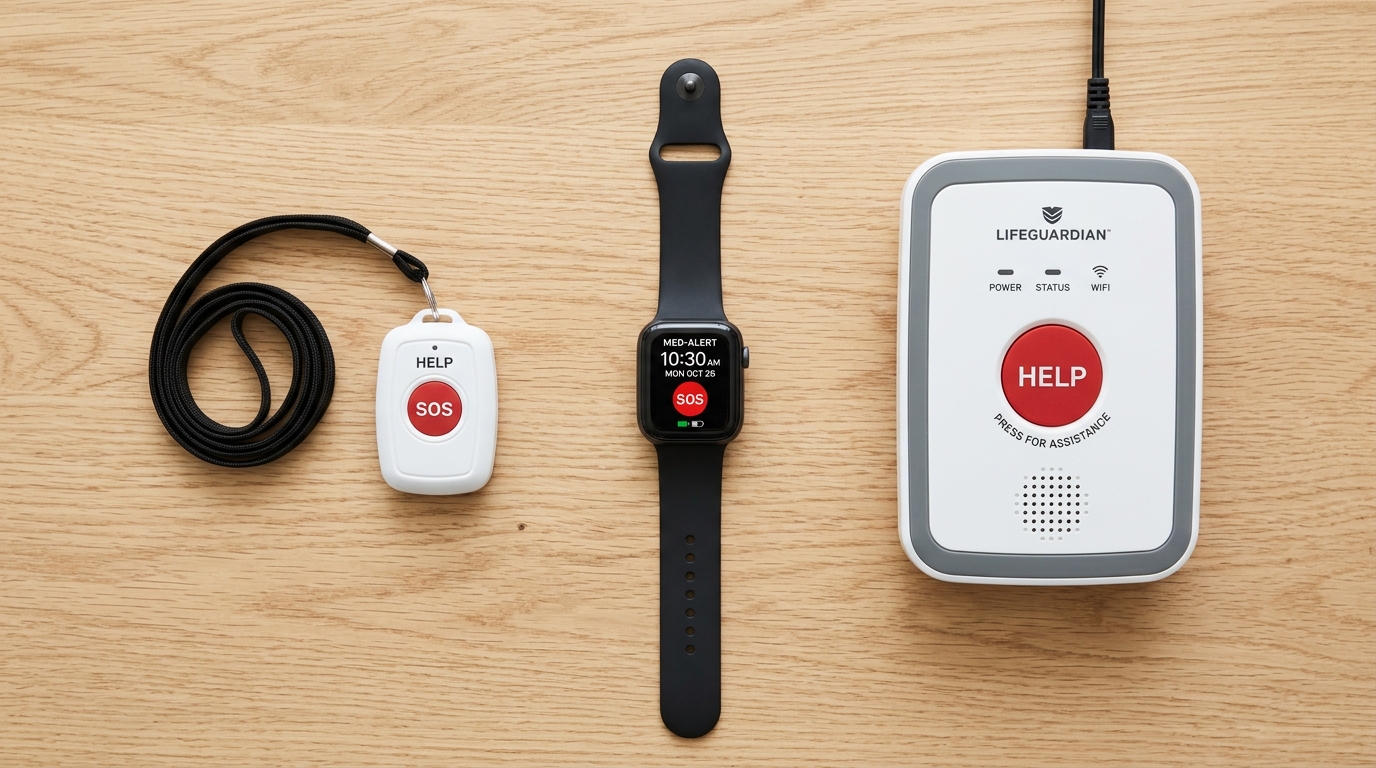
These companies have been independently verified for transparent pricing, UL-listed monitoring centers, no long-term contracts, and consistent positive reviews.
- Bay Alarm Medical — 75+ years in security, A+ BBB, 31-second response time
- Medical Guardian — A+ BBB, Five Diamond-certified monitoring, MyGuardian app
- MobileHelp — A+ BBB, lowest pricing in industry, nationwide coverage
- LifeFone — Operating since 1976, A+ BBB, free spouse coverage
What to Do If You Have Been Scammed
If you or your parent has already been victimized by a medical alert scam, take these steps.
Contact your bank or credit card company immediately to dispute charges and potentially freeze the account. Report the scam to the FTC at reportfraud.ftc.gov. File a complaint with your state attorney general's office. Report the company to the BBB at bbb.org. If personal information was shared, consider placing a fraud alert on credit reports through the three major bureaus (Equifax, Experian, TransUnion).
If you signed a contract under pressure, you may have cancellation rights under your state's consumer protection laws. Many states require a cooling-off period for door-to-door sales. Consult your state's consumer protection office for guidance.
The Bottom Line
Medical alert scams prey on the fear and urgency that families feel when protecting aging loved ones. The best defense is simple: never respond to unsolicited calls, never give personal information to strangers, always verify companies independently, and stick with established providers who have transparent pricing and no contracts.
A real medical alert system from a reputable company costs $20 to $50 per month with no hidden fees. If an offer sounds too good to be true — free system, government-sponsored, today-only pricing — it is.