

The Simple Version
A medical alert system works in three steps. You press the button. A trained operator answers within 30 to 60 seconds. The operator sends help — whether that means dispatching an ambulance, calling your doctor, or notifying your family.
That simplicity is the entire point. When you are in an emergency — on the floor after a fall, experiencing chest pain, feeling faint — you do not need to find your phone, unlock it, dial 911, and explain your situation and location. You press one button and someone handles the rest.
Here is exactly what happens at each stage, so you know what to expect.
Step 1: The Alert
An alert is triggered in one of two ways.
Manual Button Press
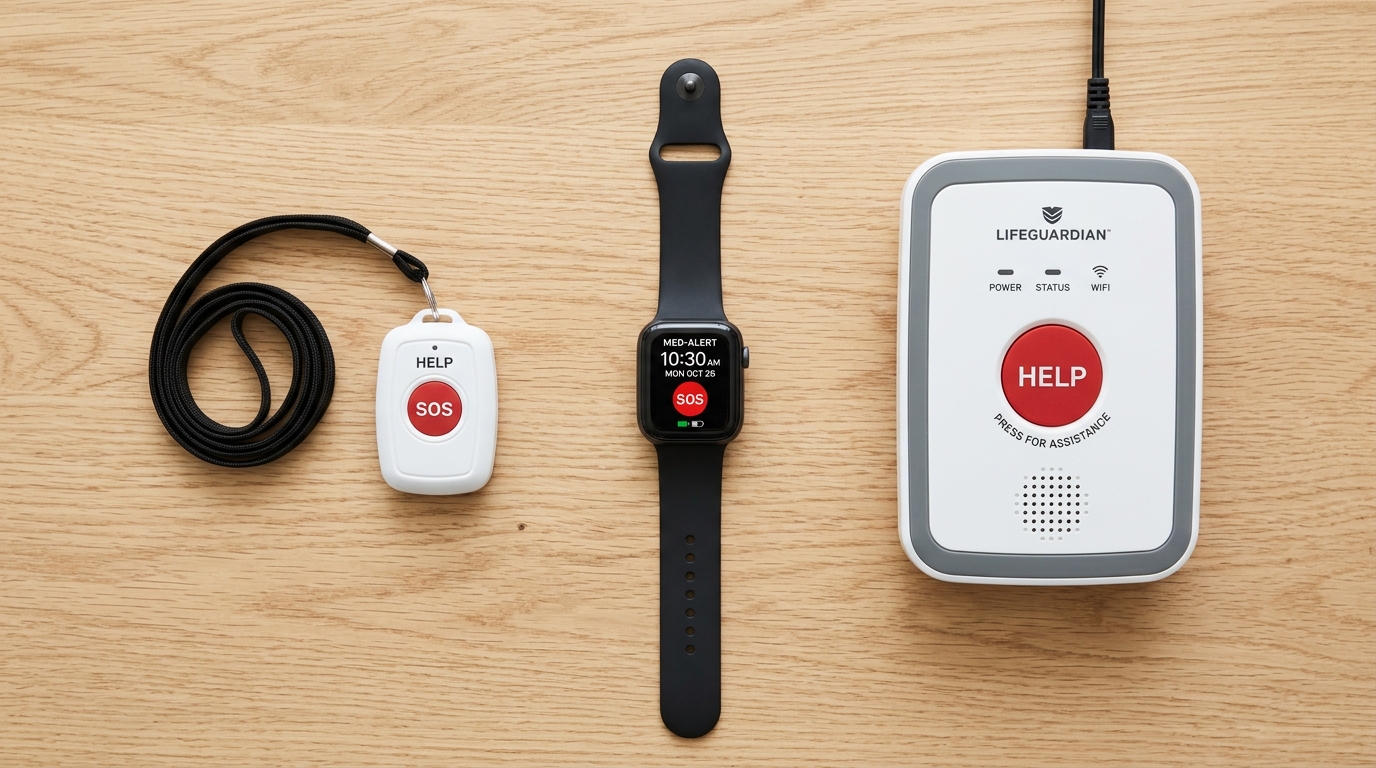
The wearer presses the SOS button on their device — a pendant, wristband, smartwatch, or mobile unit. This is the most common way alerts are triggered. The button is designed to be large, easy to find, and simple to press even with limited dexterity.
Most devices are waterproof, so the button works in the shower, near the sink, or outdoors in the rain. The button can typically be pressed from any position — lying on the floor, sitting in a chair, standing. There is no sequence to remember, no code to enter. One press activates the system.
Automatic Fall Detection
If the device includes fall detection (an optional add-on with most providers), sensors built into the device can detect a fall and trigger an alert automatically. This is critical when the wearer is unable to press the button due to unconsciousness, disorientation, or physical inability to reach the device.
Fall detection uses two types of sensors working together. An accelerometer measures sudden changes in speed, direction, and impact force. A barometric altimeter detects changes in altitude — the shift from standing height to ground level. When both sensors detect a pattern consistent with a fall, the device triggers an automatic alert.
The alert typically gives the wearer 30 to 60 seconds to cancel if it was a false alarm (sitting down quickly, dropping the device). If not canceled, the monitoring center is contacted.
Step 2: The Connection
Once an alert is triggered, the device connects to the monitoring center. This happens over either the cellular network (most modern systems) or a landline phone connection (older or budget systems).
What the Monitoring Center Is
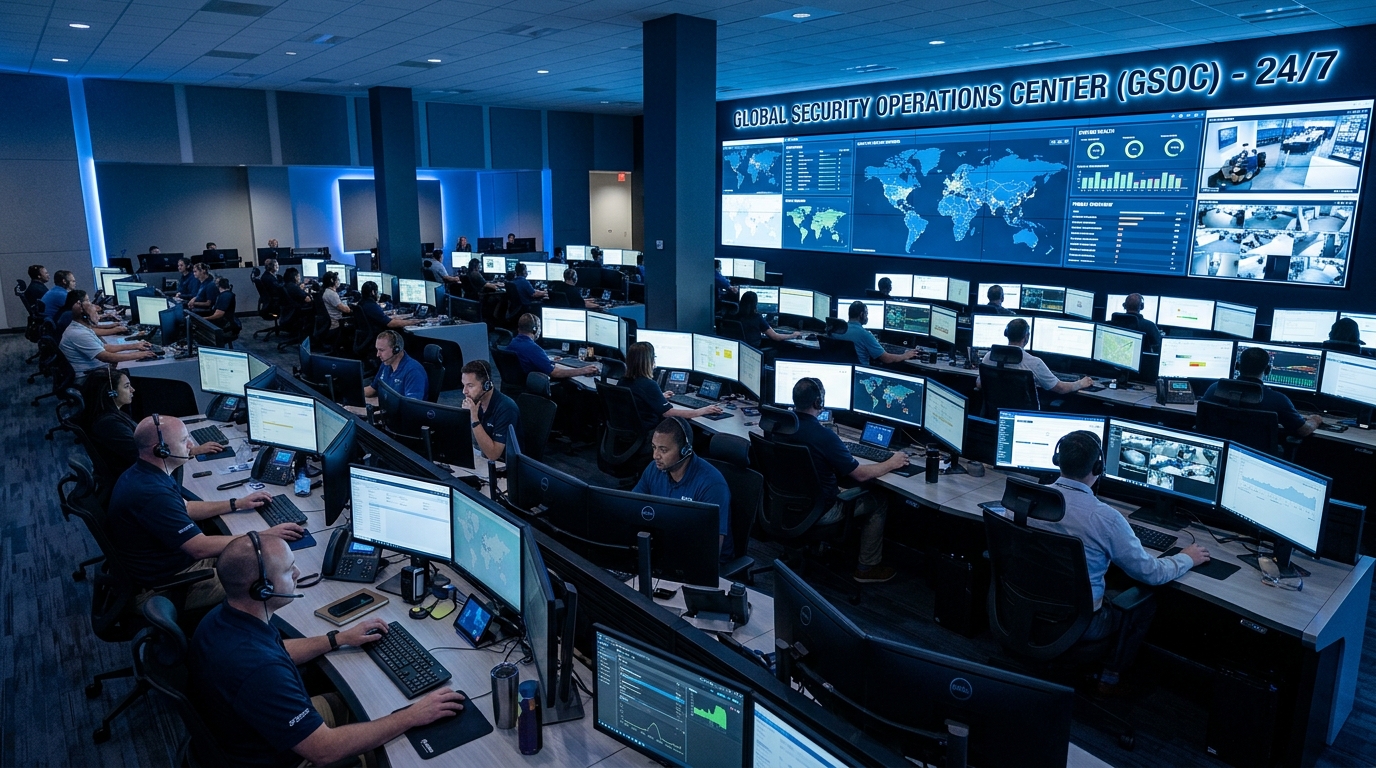
A monitoring center is a staffed facility that operates 24 hours a day, 7 days a week, 365 days a year. Trained operators sit at workstations equipped with communication systems, medical databases, and dispatch tools.
When your alert comes in, the operator's screen displays your name and identifying information, your home address and current GPS location (if using a mobile device), your emergency contacts and their phone numbers, your medical conditions, medications, and allergies, your doctor's name and number, and any special instructions (such as a dementia diagnosis, hearing impairment, or preferred hospital).
This information is pre-loaded into the system when you set up the account. The operator has everything they need to coordinate help without asking you to provide it under duress.
Response Time
Response time — the interval from button press to a live operator on the line — varies by provider. Bay Alarm Medical leads the industry at 31 seconds average. Medical Guardian averages 25 to 35 seconds. Most quality providers fall between 30 and 45 seconds. The industry average is 40 to 60 seconds.
During this time, the device is connecting to the monitoring center and the operator is reviewing your account information. From your perspective, you press the button and wait for a voice. Within half a minute to a minute, you are speaking with someone who can help.
Two-Way Voice
The operator speaks to you through the device itself — the base station speaker (for in-home systems) or the device's built-in speaker (for mobile and smartwatch systems). You do not need a phone. You do not need to be near anything other than the device you are wearing.
This two-way communication allows the operator to assess the situation. Are you conscious? Can you speak? Are you in pain? What happened? Based on your responses, the operator determines the appropriate response.
Step 3: The Response
Based on the communication (or lack of communication), the operator takes action.
If You Can Communicate
If you tell the operator you have fallen and cannot get up, the operator will typically ask about injuries and pain levels, confirm your location (are you at home or away?), ask if you want an ambulance dispatched, and contact your emergency contacts to inform them.
If the situation is not a medical emergency — for example, you fell but are not injured and just need help standing — the operator can call a family member or neighbor to come assist. Not every alert requires an ambulance.
If You Cannot Communicate
If the operator hears no response, or if the alert was triggered by automatic fall detection and the wearer is not responding, the operator follows a safety-first protocol. Emergency services are dispatched to the wearer's location, and all listed emergency contacts are called.
This automatic escalation is one of the most important features of a monitored system. If you are unconscious or unable to speak after a fall, help is still coming.
What Emergency Responders Receive
When the monitoring center dispatches emergency services, they provide the 911 dispatcher with the wearer's exact location (address or GPS coordinates), the nature of the alert (fall, medical emergency, manual button press), any relevant medical information from the account (medications, conditions, allergies), and the monitoring center's callback number for coordination.
First responders arrive with context about the situation, which can improve response quality and speed.
The Technology Behind It
Cellular vs. Landline
Most modern medical alert systems connect over cellular networks. This means no landline phone, no internet connection, and no WiFi are required. The device has a built-in cellular radio, similar to a basic cell phone, that connects to the monitoring center.
Cellular systems are more reliable than landline systems because they are not affected by cut phone lines or service interruptions. They also enable GPS tracking on mobile devices.
Some budget systems still offer landline connections for homes that have them. These tend to be less expensive but limit the system to the range of the phone connection.
GPS and Location
Mobile GPS devices use satellite positioning, Wi-Fi network detection, and cellular tower triangulation to determine the wearer's location. When an alert is triggered, this location is transmitted to the monitoring center automatically.
GPS accuracy is typically 15 to 50 feet outdoors and 50 to 150 feet indoors. This is sufficient for emergency responders to find the wearer at a specific building, intersection, or general area.
Backup Battery
In-home base stations include backup batteries that provide 24 to 32 hours of operation during a power outage. The base station switches to battery power automatically when electricity is lost, and switches back when power returns.
This means the system remains operational during storms, blackouts, and other power disruptions — times when medical emergencies are actually more likely due to heat, cold, or difficulty navigating a dark home.
What a Monitored System Provides vs. Calling 911 Directly
You might wonder why a medical alert system is needed when anyone can call 911 from a phone. The differences are significant.
A medical alert is always within reach — worn on the body, not sitting on a table or counter. It works when you cannot speak or give your location. It automatically shares your medical history with responders. It contacts your family simultaneously. It works even when you cannot find, reach, or operate a phone. And for fall detection, it works when you do not realize you need help.
Calling 911 from a phone requires locating the phone, unlocking it, dialing, and coherently communicating your situation and address. After a fall, stroke, or cardiac event, one or more of those steps may be impossible.

The Bottom Line
Medical alert systems are straightforward technology with a simple purpose: when something goes wrong, help arrives fast. You press a button, a professional responds in under a minute, and the right help is dispatched while your family is notified.
The technology behind the system — cellular connections, GPS, fall detection sensors, monitored centers — is mature and reliable. The process is designed to work when you are at your most vulnerable, which is exactly when it matters most.
Sources
- UL: UL Listed Monitoring Centers — Standards and certification for alarm monitoring centers, ensuring professional staffing and redundant communication systems
- CSAA: Central Station Alarm Association Standards — Industry standards and Five Diamond certification for central monitoring stations and emergency dispatch protocols
- FCC: Personal Emergency Response Systems — Federal communications regulations governing personal emergency response devices and cellular-connected medical alert systems


