
The Stakes Are Higher When You Live Alone
Nearly 16 million Americans over the age of 65 live alone. For most of them, daily life is independent and manageable. But when something goes wrong — a fall in the kitchen, a sudden illness, a dizzy spell in the bathroom — living alone means there is no one to call 911, no one to hear the call for help, and no one to know something happened until hours or days later.
The average time a senior spends on the floor after a fall before being discovered is approximately six hours. For those who live alone, that number can extend to 24 hours or more. Extended time on the floor after a fall dramatically increases the risk of dehydration, hypothermia, pressure sores, rhabdomyolysis, and death.
A medical alert system does not prevent falls or illness. But for seniors living alone, it eliminates the most dangerous part of the equation — the waiting. Help arrives in minutes instead of hours, and that difference saves lives.
Our Top 4 Picks for Seniors Living Alone
1. Bay Alarm Medical SOS Home + Fall Detection — Best Overall
$27.95/month + $10/mo fall detection = $37.95/month
For seniors who spend most of their time at home, the SOS Home with automatic fall detection is the best combination of price, speed, and safety. The 31-second response time means help is on the line faster than with any other provider. The waterproof help button can be worn in the shower — where many falls happen — and the base station's backup battery provides 32 hours of protection during power outages.
Fall detection is essential for someone living alone. If a fall causes unconsciousness or disorientation, the device contacts the monitoring center automatically. At $37.95 per month total, this provides the core protection that every senior living alone needs.
2. Medical Guardian Active Guardian — Best for Remote Family Monitoring
$46.95/month + $10/mo fall detection = $56.95/month
If you are an adult child monitoring a parent from a distance, the Active Guardian paired with the MyGuardian caregiver app provides the most visibility. Real-time GPS tracking, geofencing alerts, activity monitoring, and emergency push notifications give you a daily connection to your parent's safety.
For seniors living alone, the knowledge that family can see their location and activity is reassuring. And for the family, the app provides the closest thing to being there in person. If your parent stops moving, leaves home at an unusual hour, or does not charge the device, you will know.
3. LifeFone VIP — Best with Daily Check-In
$49.95/month (fall detection included)
LifeFone's VIP plan is uniquely suited for seniors living alone because of the daily check-in call. Every day, a LifeFone operator calls the subscriber to verify they are okay. If the call goes unanswered after multiple attempts, emergency contacts are notified.
This proactive monitoring addresses the specific fear that a senior living alone could experience a medical event that does not trigger fall detection — illness, stroke, diabetic episode — and go undiscovered for days. The daily call ensures that at minimum, someone checks on them every 24 hours.
Fall detection is included in the price, and the system provides both home and mobile coverage. Free spouse coverage applies if a partner moves in later.
4. Bay Alarm Medical SOS Smartwatch — Best Wearable for All-Day Protection
$39.95/month + $10/mo fall detection = $49.95/month
For active seniors who live alone and leave the house regularly, the SOS Smartwatch provides around-the-clock protection that travels with them. The watch tells time, tracks steps, and monitors heart rate — which means the wearer is motivated to keep it on all day, not just at home.
The dedicated SOS button connects to Bay Alarm's monitoring center with GPS location, and fall detection is available as an add-on. For seniors living alone who drive, shop, walk, or visit friends, the smartwatch ensures coverage everywhere, not just within range of a home base station.
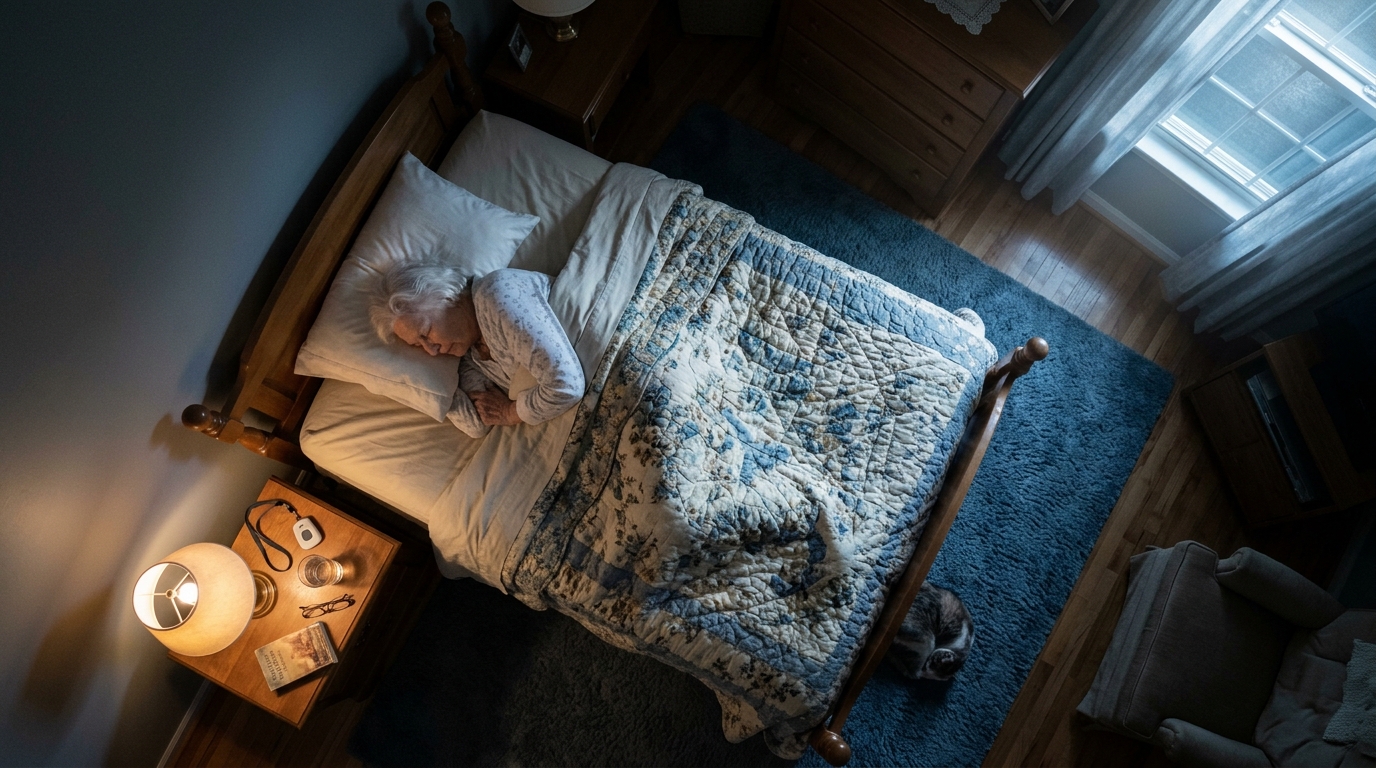
Why Fall Detection Is Non-Negotiable When Living Alone
For a senior who lives with a spouse, family member, or caregiver, the manual help button is often sufficient. If they fall and cannot press the button, someone is there to call 911.
For a senior living alone, there is no backup. If a fall causes loss of consciousness, severe pain that prevents reaching the button, confusion or disorientation from a head injury, or the inability to move due to a broken hip, the manual button provides zero protection. Automatic fall detection fills this gap by contacting the monitoring center without requiring any action from the wearer.
At $10 per month (or free with LifeFone's At-Home & On-the-Go and VIP plans), fall detection is the single most important add-on for anyone living alone.
Additional Safety Layers
A medical alert system should be the foundation, not the ceiling, of a safety plan for seniors living alone.
Daily check-ins from family. A brief daily phone call at a consistent time establishes a routine. If the call goes unanswered, you know something may be wrong. This costs nothing and takes five minutes.
Smart home sensors. Motion sensors in key rooms (kitchen, bathroom, bedroom) can flag unusual inactivity. A sensor that detects no kitchen motion by 10 AM when your parent is normally up by 7 is an early warning sign.
Medication management. Missed medications are a common trigger for falls, confusion, and medical events. An automatic pill dispenser that alerts caregivers when doses are missed provides an additional safety net.
Neighbor awareness. Let a trusted neighbor know your parent lives alone and ask them to look for signs of trouble — mail piling up, newspapers on the porch, lights staying on or off at unusual hours. A simple agreement to check in can prevent a tragedy.

The Bottom Line
Living alone is not inherently dangerous. Millions of seniors do it safely and happily every day. But it does mean that when something goes wrong, the margin for error is smaller. A medical alert system with fall detection ensures that help arrives in minutes rather than hours, and that is the difference that matters most.
For most seniors living alone, Bay Alarm Medical SOS Home with fall detection at $37.95 per month provides the essential protection at an affordable price. For families who want daily visibility, Medical Guardian with the MyGuardian app is worth the premium. For proactive daily check-ins, LifeFone's VIP plan is unique in the industry.
Whatever you choose, do not wait. The time to get a medical alert system is before the first fall, not after.