Medical Guardian vs Bay Alarm Medical: Which Should You Choose?
Medical Guardian and Bay Alarm Medical are two of the top-rated medical alert systems in 2026. Both offer reliable 24/7 monitoring, fall detection, and flexible month-to-month billing. But they differ in meaningful ways — pricing, caregiver tools, equipment options, and response time — that could make one a better fit for your family than the other.
We have tested both systems extensively. Here is how they compare across every category that matters.
Pricing Comparison
Price is often the deciding factor, so let us start there.
| Feature | Medical Guardian | Bay Alarm Medical | |---|---|---| | Cheapest Plan | $38.95/mo (Classic Guardian) | $27.95/mo (SOS Home) | | Mid-Range Plan | $39.95/mo (Home 2.0 or Mini) | $34.95/mo (SOS Micro) | | Premium Plan | $46.95/mo (Active Guardian) | $39.95/mo (SOS Smartwatch) | | Fall Detection | +$10/mo | +$10/mo | | Contract | None | None | | Money-Back Guarantee | 30 days | 30 days |
Winner: Bay Alarm Medical. The savings are significant. The cheapest Bay Alarm plan is $11 per month less than Medical Guardian's entry point. Over a year, that adds up to $132 in savings — meaningful money for anyone on a fixed income.

Equipment
Both companies offer in-home and mobile devices, but the lineups differ.
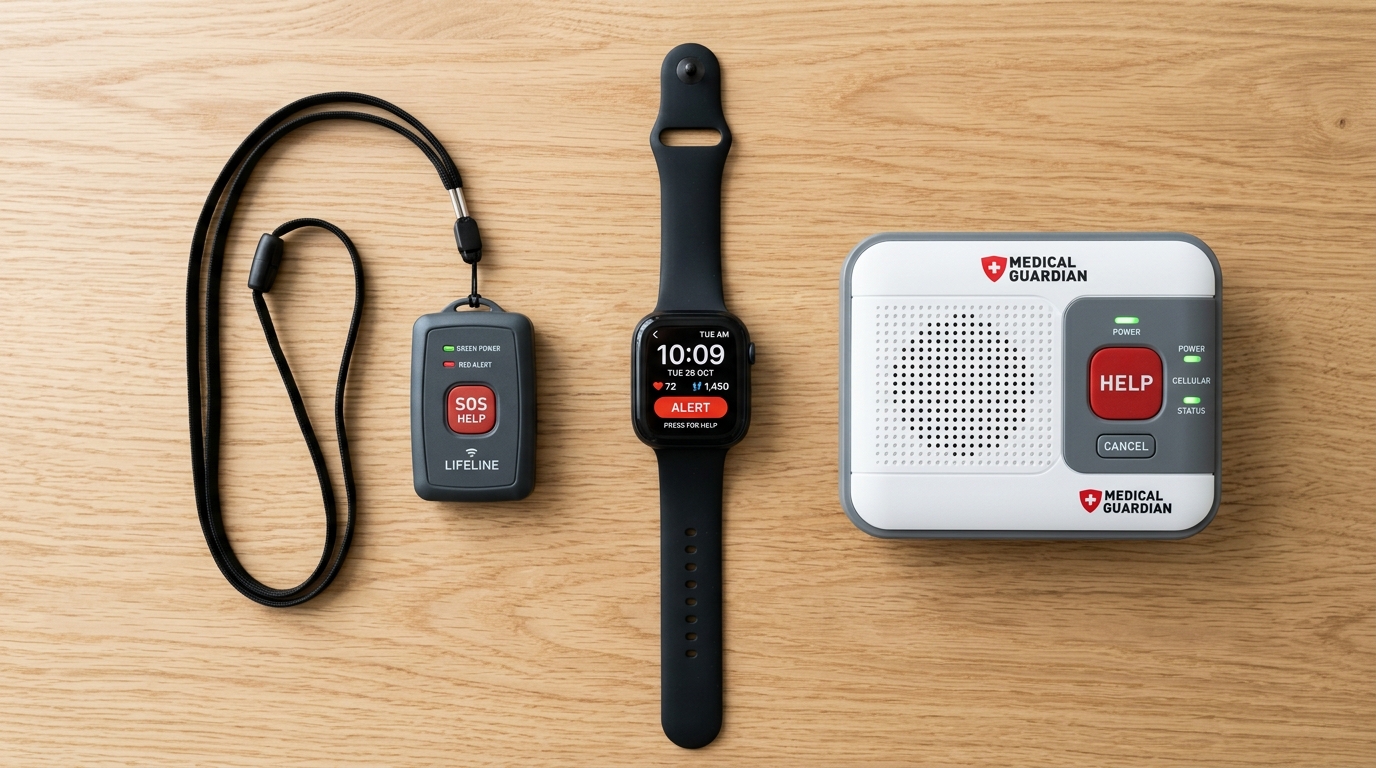
Medical Guardian provides four devices: the Classic Guardian (landline or cellular base station), the Home 2.0 (cellular-only with enhanced speaker), the Mini Guardian (compact GPS fob), and the Active Guardian (full-featured mobile GPS unit). The variety is a strength. No matter what your loved one's lifestyle or preference, Medical Guardian has a device that fits.
Bay Alarm Medical offers three devices: SOS Home (cellular base station), SOS Micro (portable GPS), and SOS Smartwatch (GPS watch with health tracking). The lineup is more focused, but the SOS Smartwatch is a standout product. It looks like a regular watch, which solves the common problem of seniors refusing to wear something that looks like a medical device.
Winner: Tie. Medical Guardian has more choices. Bay Alarm Medical has the best smartwatch option. It depends on what your parent needs.
Fall Detection
Both companies offer automatic fall detection as a $10 per month add-on. The underlying technology is similar — accelerometers and barometric sensors that detect sudden changes in motion and altitude consistent with a fall.
At Medical Guardian, fall detection is available on all four devices. At Bay Alarm Medical, it is available on the SOS Micro and SOS Smartwatch but not the SOS Home base station button.
Detection accuracy is comparable between the two systems. Both reliably catch hard, sudden falls and struggle with the same edge cases — slow falls, fainting while seated, and very cushioned landings.
Winner: Medical Guardian, by a slight margin. The availability of fall detection across all devices, including the in-home system, gives it the edge for families who want fall protection specifically for a parent who stays home.
Caregiver App
This is the category with the biggest gap between the two companies.
Medical Guardian's MyGuardian app (free on iOS and Android) offers real-time GPS tracking on a map, geofencing with automatic alerts when a loved one leaves or enters a zone, activity notifications confirming the device is being worn and charged, emergency contact management, and a timeline of recent alerts and location history.
Bay Alarm Medical provides a web-based caregiver portal that covers the basics — device status, GPS location for mobile devices, and contact management — but does not offer a dedicated mobile app, geofencing, or activity notifications.
Winner: Medical Guardian, decisively. If staying connected to your parent's location and activity is important to you, the MyGuardian app is in a different league. This is Medical Guardian's single biggest competitive advantage.
Response Time
When you press the help button, how long does it take to reach a live operator?
Bay Alarm Medical averages 31 seconds. Medical Guardian averages 25 to 35 seconds depending on the time of day and the device.
Both companies operate UL-listed, Five Diamond-certified monitoring centers. Both employ US-based operators around the clock. The difference is slim, and both are well ahead of the industry average of 40 to 60 seconds.
Winner: Roughly a tie, with Bay Alarm Medical holding a slight edge on consistency. Both are among the fastest in the industry.
Contract and Flexibility
Neither company requires a long-term contract. Both offer month-to-month billing with no cancellation penalty and a 30-day money-back guarantee.
Both offer discounts for quarterly and annual prepayment. Equipment is included at no extra charge on standard plans for both companies, though Medical Guardian occasionally runs promotions that may include or exclude equipment fees.
Winner: Tie. Both companies give you maximum flexibility.
Who Should Choose Medical Guardian?
Medical Guardian is the better choice if you want the most advanced caregiver app with real-time GPS tracking and geofencing, you need fall detection on an in-home base station device, your loved one would benefit from the widest range of equipment options, and you are willing to pay a premium for a polished, feature-rich experience.
The ideal Medical Guardian customer is an adult child who wants to actively monitor a parent's location and daily activity from a smartphone app.
Who Should Choose Bay Alarm Medical?
Bay Alarm Medical is the better choice if budget is a primary concern and you want the lowest monthly cost for quality monitoring, your loved one would prefer a smartwatch that does not look like a medical device, you prioritize the fastest possible response time, and you want a simple and focused product lineup without too many choices.
The ideal Bay Alarm Medical customer is a family that wants the best core protection — fast response, reliable monitoring — at the best price.
The Verdict
Both Medical Guardian and Bay Alarm Medical are excellent systems. You will not go wrong with either one.
Choose Bay Alarm Medical if price and response speed are your priorities. At $27.95 per month with a 31-second response time, it is the best value in the industry.
Choose Medical Guardian if caregiver connectivity is your priority. The MyGuardian app's real-time GPS tracking and geofencing are unmatched, and the broader equipment range gives you more flexibility.
For most families, we recommend Bay Alarm Medical as the starting point. The lower cost makes it easier to commit, the 30-day guarantee removes risk, and the monitoring quality is outstanding. If you find yourself wishing for more caregiver features down the road, Medical Guardian is always there as an upgrade.