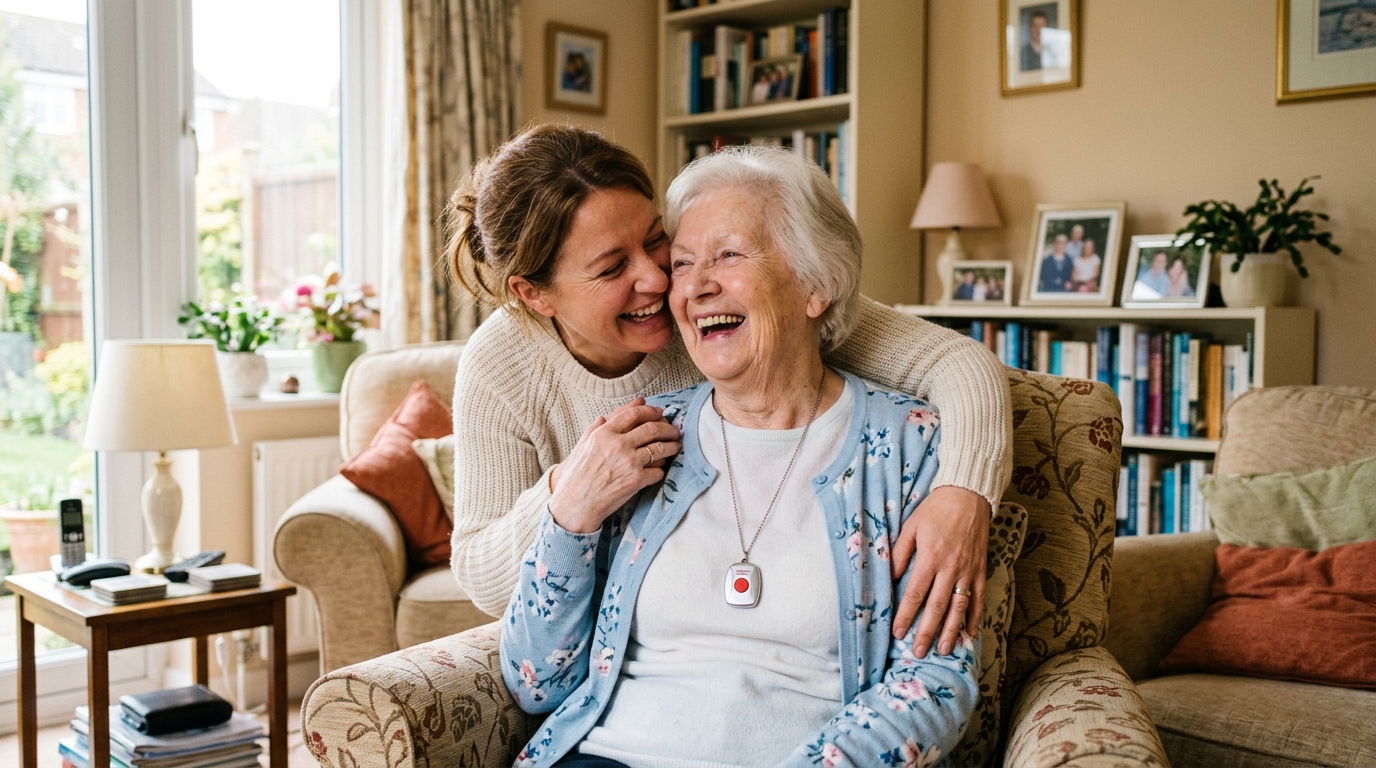
The Family Meeting Nobody Wants to Have
Getting a medical alert system for a parent should be simple. The technology exists, the cost is low, and the benefit is clear. But families are not simple. Siblings have different opinions. Parents have pride. Nobody wants to be the one who suggests that Mom or Dad needs help.
The result is that the conversation gets postponed. Weeks turn into months. And sometimes a fall or a medical emergency forces the decision before the family is ready.
This guide is for the family member who is ready to have the conversation — with siblings, with parents, or with both — and wants a practical framework for making it productive rather than painful.
Start with Siblings Before Parents
If you have siblings, align with them before approaching your parent. A parent who senses disagreement among their children will use it to deflect. "Well, your brother doesn't think I need one" becomes the reason nothing happens.
How to Bring It Up with Siblings
Be direct and specific. Vague concerns get vague responses. Instead of "I'm worried about Mom," try: "Mom fell last month getting out of the shower. She didn't tell us for three days. I think we need to get her a medical alert system with fall detection."
Lead with a plan, not just a problem. Come prepared with a specific recommendation. "I've looked into it. Bay Alarm Medical costs $27.95 a month with no contract. If we split it three ways, that's under $10 each. I'll set it up."
Share the facts. One in four adults over 65 falls each year. Falls are the leading cause of injury-related death in older adults. The average time a senior spends on the floor after an unwitnessed fall is over six hours. A medical alert reduces that to minutes.
Address the cost upfront. Cost objections are common, especially from siblings who are less involved in caregiving. Break it down: $27.95 per month is $0.93 per day. Split among siblings, it is the cost of a coffee. Compared to a $30,000 hip fracture hospital stay, it is negligible.
When Siblings Disagree
Common objections from siblings and how to address them:
"Mom doesn't need one yet." Response: "The time to get one is before the first fall, not after. The average hip fracture costs $30,000 and three months of recovery. This costs $28 a month."
"She won't wear it." Response: "The new ones look like regular watches. Let's try the Bay Alarm Smartwatch — it tells time, tracks steps, and she probably won't even think of it as a medical device. There's a 30-day money-back guarantee."
"I can't afford it." Response: "I'll cover it. But if you can chip in even $5 or $10 a month, it helps." Remove cost as a barrier by offering to handle it.
"She has her phone." Response: "Phones work if you can find them, unlock them, and dial while on the floor in pain. A medical alert works with one button press from any position."
If siblings ultimately refuse to participate, do it yourself. At $28 to $40 per month, one person can manage the cost. The parent's safety matters more than family politics.

Talking to Your Parent
Once siblings are aligned — or if you are an only child — it is time to talk to your parent. The full guide on convincing a reluctant parent is in our article on that topic, but here are the key principles for the family context.
Present a united front. If multiple children express the same concern, it carries more weight than one child's suggestion. "We've all talked about it and we all feel the same way" is harder to dismiss than "I think you should."
Make it a gift, not a demand. "We want to do this for you" feels different than "You need to do this." Position the medical alert as something the family is providing, not something being imposed.
Give them choices. Show two or three options and let them pick. A parent who chooses their device feels ownership. A parent who has a device forced on them feels controlled.
Use the 30-day trial. Lower the stakes by framing it as temporary. "Just try it for a month. If you don't like it, we'll return it." Most parents who agree to a trial end up keeping the device.
Sharing Responsibilities
A medical alert system works best when the family coordinates around it. Here is how to divide responsibilities.
Payment: Split the monthly cost or assign it to one person. Set up autopay so nobody has to remember. Venmo, Zelle, or a shared credit card work for reimbursement.
Setup: The most tech-comfortable family member should handle initial setup — unboxing, connecting, testing, and configuring emergency contacts.
Emergency contacts: List multiple family members as emergency contacts on the account. The monitoring center calls contacts in order, so list the person most likely to answer first.
Check-ins: Rotate who calls the parent daily or weekly. This distributes the caregiving load and ensures the parent has regular contact with all children.
Account management: Assign one person as the primary account holder who can update contacts, manage billing, and communicate with the provider.
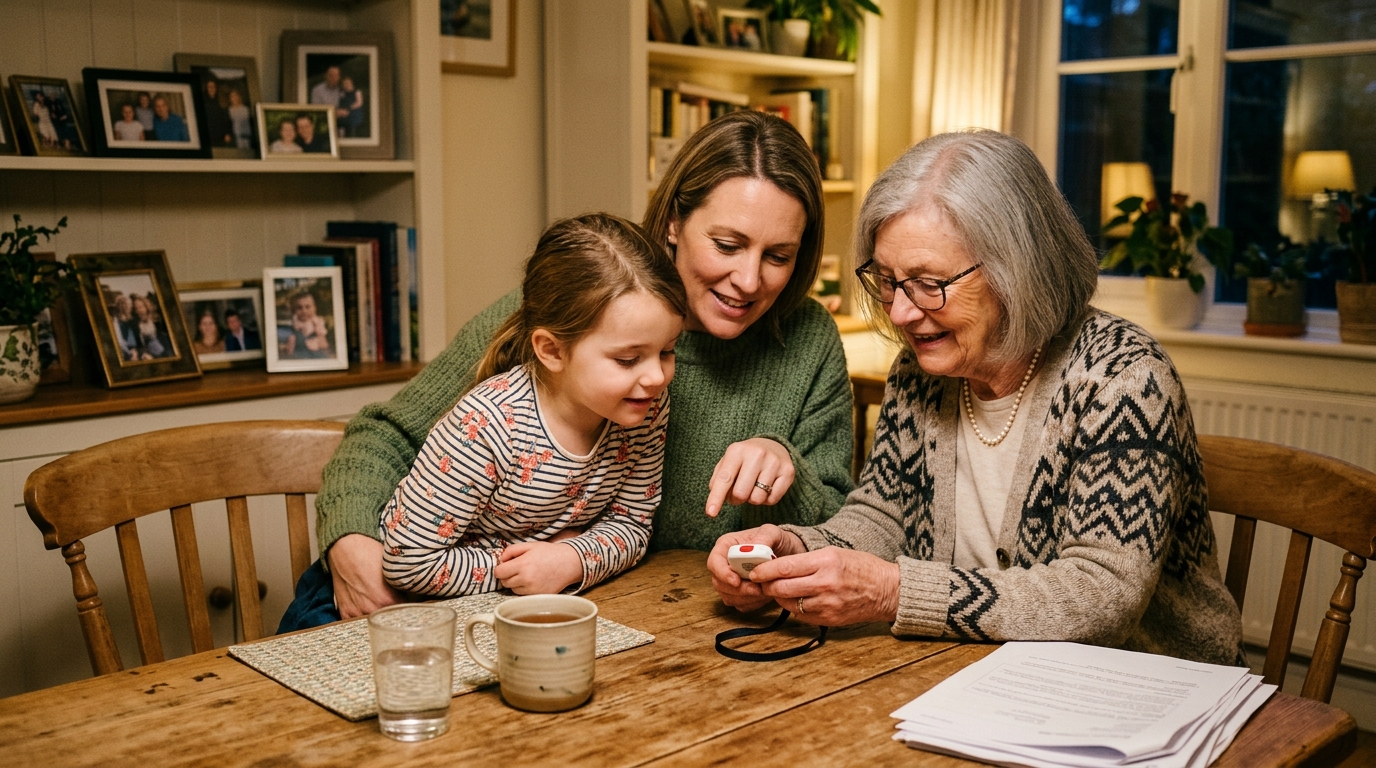
When the Caregiver Burden Is Unequal
In many families, one sibling carries the majority of the caregiving responsibility. If that is you, a medical alert system is one of the most effective ways to share the load — even if your siblings will not help with anything else.
The medical alert handles the emergency response. It does not need a family member to be nearby, available, or even awake. When the button is pressed, the monitoring center handles it. Your siblings may not visit Mom every week, but they can contribute $10 a month to ensure she has 24/7 professional protection.
Frame the conversation in those terms: "I'm doing most of the caregiving. This is something concrete you can contribute that directly helps Mom and takes pressure off me. It's $10 a month."

The Bottom Line
Family discussions about medical alert systems are about safety, not about who is right. Lead with specific concerns and a specific plan. Align with siblings first. Present options to your parent and let them choose. Split the cost so nobody bears it alone.
The conversation may be uncomfortable. The absence of a medical alert when something happens is far worse.
At $28 to $40 per month — under a dollar a day — the financial barrier is almost nonexistent. The emotional barrier is the one that needs work. Approach it with empathy, patience, and a clear plan, and most families find their way to yes.