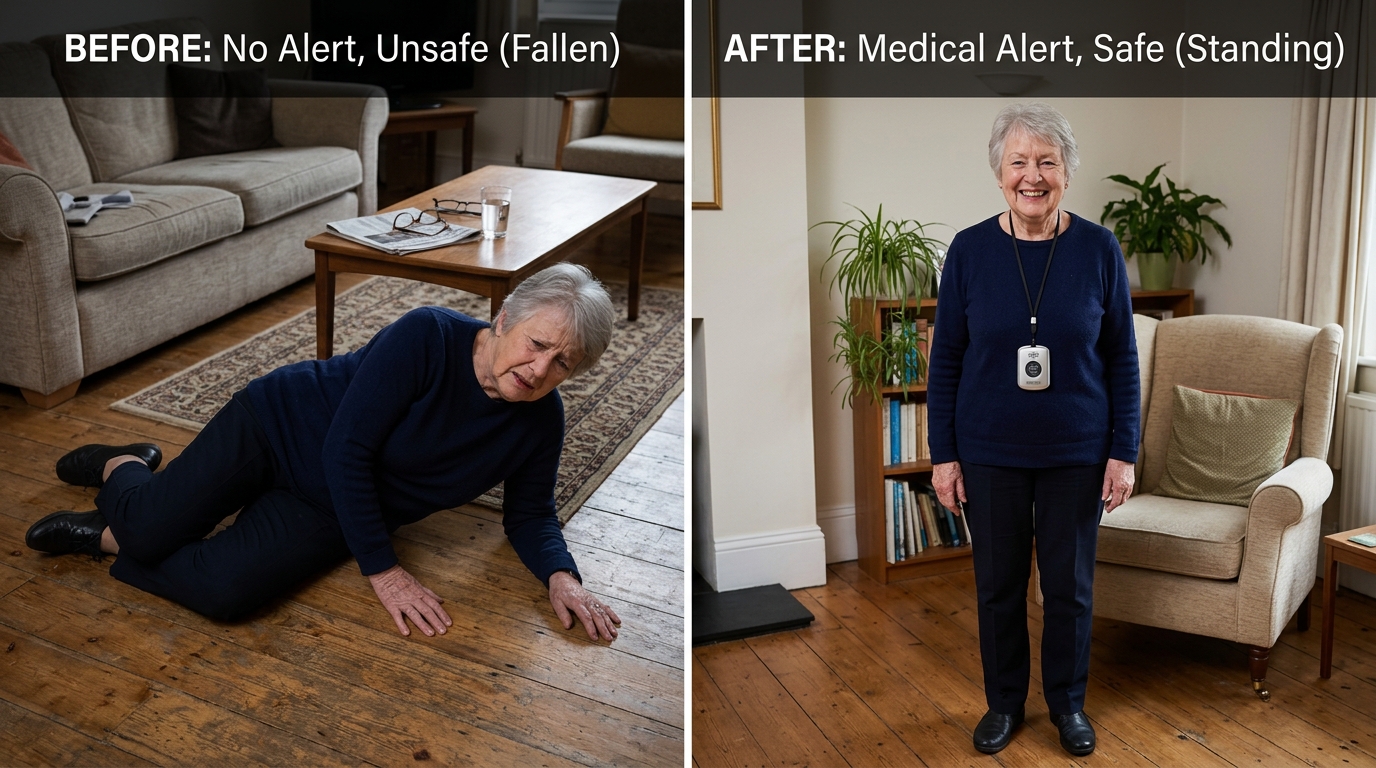
Why Fall Detection Matters
Every year, more than one in four adults over the age of 65 experiences a fall. Falls are the leading cause of injury-related death in older Americans, and the risk increases sharply with age. A medical alert system with automatic fall detection can call for help even when the wearer is unable to press the button — because of disorientation, loss of consciousness, or physical inability to reach the device.
We tested the top medical alert systems with fall detection in 2026 and narrowed the field to four standout picks. Here are our recommendations based on accuracy, response time, pricing, and overall user experience.
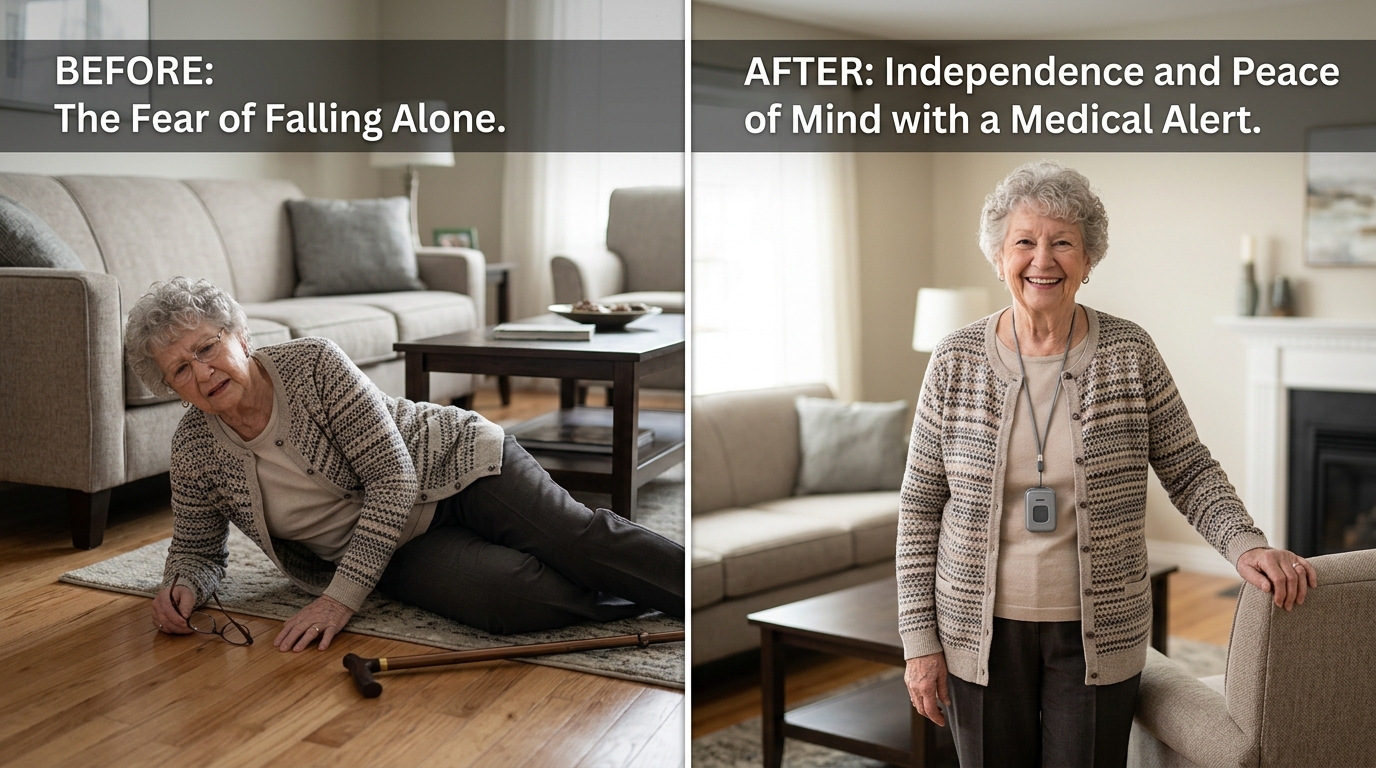
Our Top 4 Picks
1. Bay Alarm Medical — Best Overall Fall Detection
Price: $34.95/mo (SOS Micro) or $39.95/mo (SOS Smartwatch) + $10/mo fall detection
Bay Alarm Medical earns the top spot for its combination of fast response time, affordable pricing, and reliable fall detection hardware. The SOS Micro and SOS Smartwatch both support automatic fall detection, and Bay Alarm's 31-second average response time means help arrives on the line faster than with any other provider.
The fall detection sensors in both devices performed well in our testing, consistently detecting forward falls, backward falls, and lateral falls from a standing position. The SOS Smartwatch has the added benefit of being worn on the wrist, which many users find more comfortable than a pendant and which provides consistent sensor contact with the body.
At $44.95 per month for the SOS Micro with fall detection, or $49.95 per month for the SOS Smartwatch with fall detection, Bay Alarm Medical is competitively priced for what you get. The 30-day money-back guarantee lets you test the system risk-free.
Best for: Families who want the fastest response time and strong fall detection at a reasonable price.
2. Medical Guardian — Best Caregiver Integration with Fall Detection
Price: $38.95-$46.95/mo + $10/mo fall detection
Medical Guardian stands out because fall detection is available across all four of its devices — including the in-home Classic Guardian and Home 2.0, not just the mobile units. This is a meaningful advantage for seniors who primarily stay home and still want automatic fall protection.
The real differentiator is the MyGuardian caregiver app. When a fall is detected, the app can notify family members in real time with the wearer's GPS location. For adult children managing a parent's care from a distance, this combination of fall detection and caregiver visibility is unmatched.
Fall detection accuracy was comparable to Bay Alarm Medical in our testing. The Active Guardian's pendant-style form factor provided reliable detection, and the monitoring center's 25-second average response time is excellent.
Best for: Families who want fall detection combined with the best caregiver app for remote monitoring.
3. LifeFone — Best Value (Fall Detection Included)
Price: $39.95/mo (At-Home and On-the-Go plan with fall detection included)
LifeFone takes a different approach: instead of charging $10 per month extra for fall detection, the company includes it in its At-Home and On-the-Go plan at $39.95 per month. That means you get both in-home base station coverage and mobile GPS protection with fall detection built in — no add-on fee required.
LifeFone's monitoring center is UL-listed and staffed 24/7 with US-based operators. Response time averages around 35 to 40 seconds, which is good but not as fast as Bay Alarm Medical or Medical Guardian. The equipment is functional and reliable, though the device design is less sleek than the competition.
Where LifeFone really shines is for couples. The company allows a spouse or partner to use the same system at no additional charge, making it the most affordable option for two people in the same household who both need fall detection coverage.
Best for: Budget-conscious families who want fall detection included without an add-on fee, especially couples.
4. MobileHelp — Best Mobile Fall Detection
Price: $41.95/mo (MobileHelp Smart) + $10/mo fall detection
MobileHelp's Smart system is purpose-built for seniors with active lifestyles who need reliable fall detection on the go. The device is compact, lightweight, and provides nationwide GPS coverage with AT&T's cellular network.
What sets MobileHelp apart for mobile fall detection is battery life. The MobileHelp Smart device lasts up to five days on a single charge, which is significantly longer than most GPS-enabled competitors. For seniors who forget to charge devices regularly, this extended battery life can be the difference between having protection and not.
MobileHelp also offers a unique partnership with Samsung for the MobileHelp Smart Watch, which combines fall detection with a full-featured smartwatch experience. The monitoring center response time averages around 35 seconds.
Best for: Active seniors who need mobile fall detection with long battery life and nationwide coverage.
How Automatic Fall Detection Works
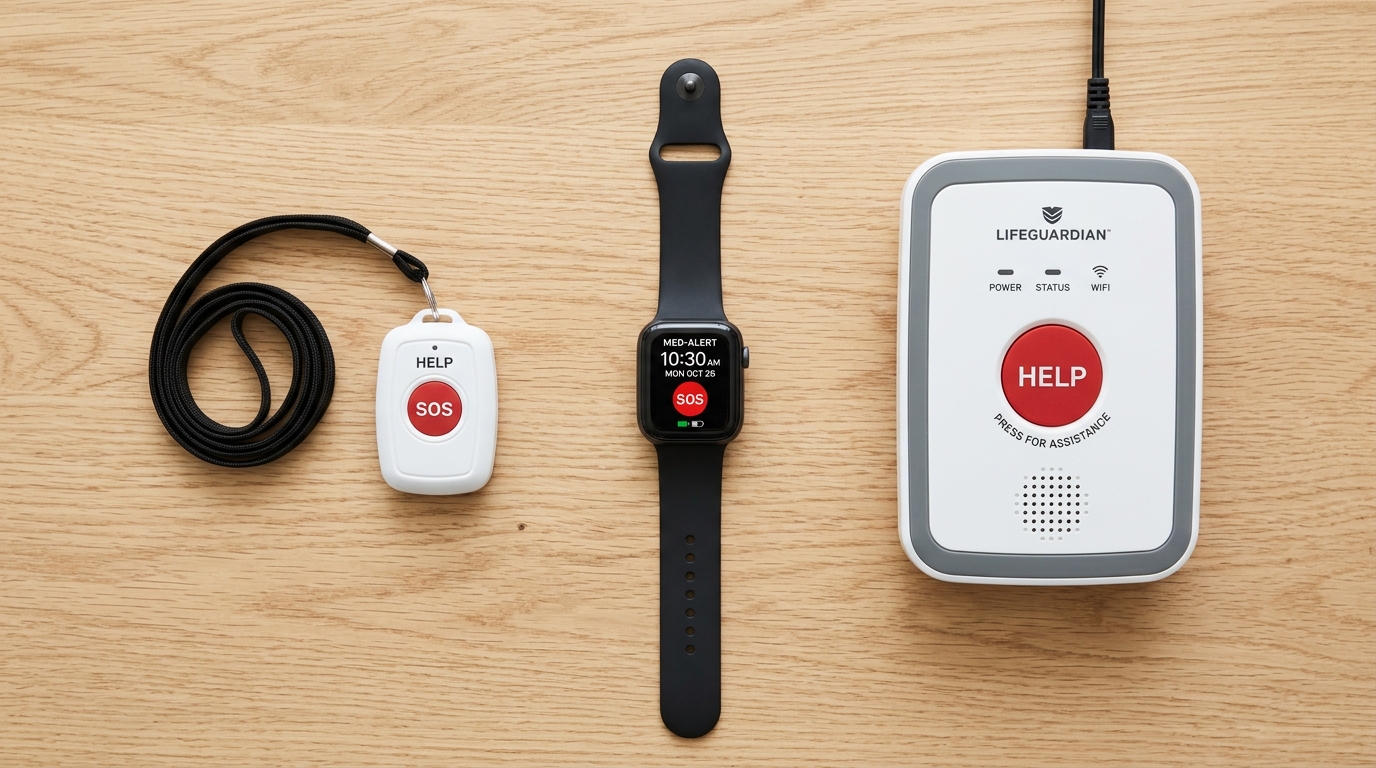
Fall detection uses sensors built into the wearable device — typically a combination of a three-axis accelerometer and a barometric altimeter. The accelerometer measures sudden changes in motion and impact force, while the altimeter detects changes in altitude that correspond to going from a standing height to the ground.
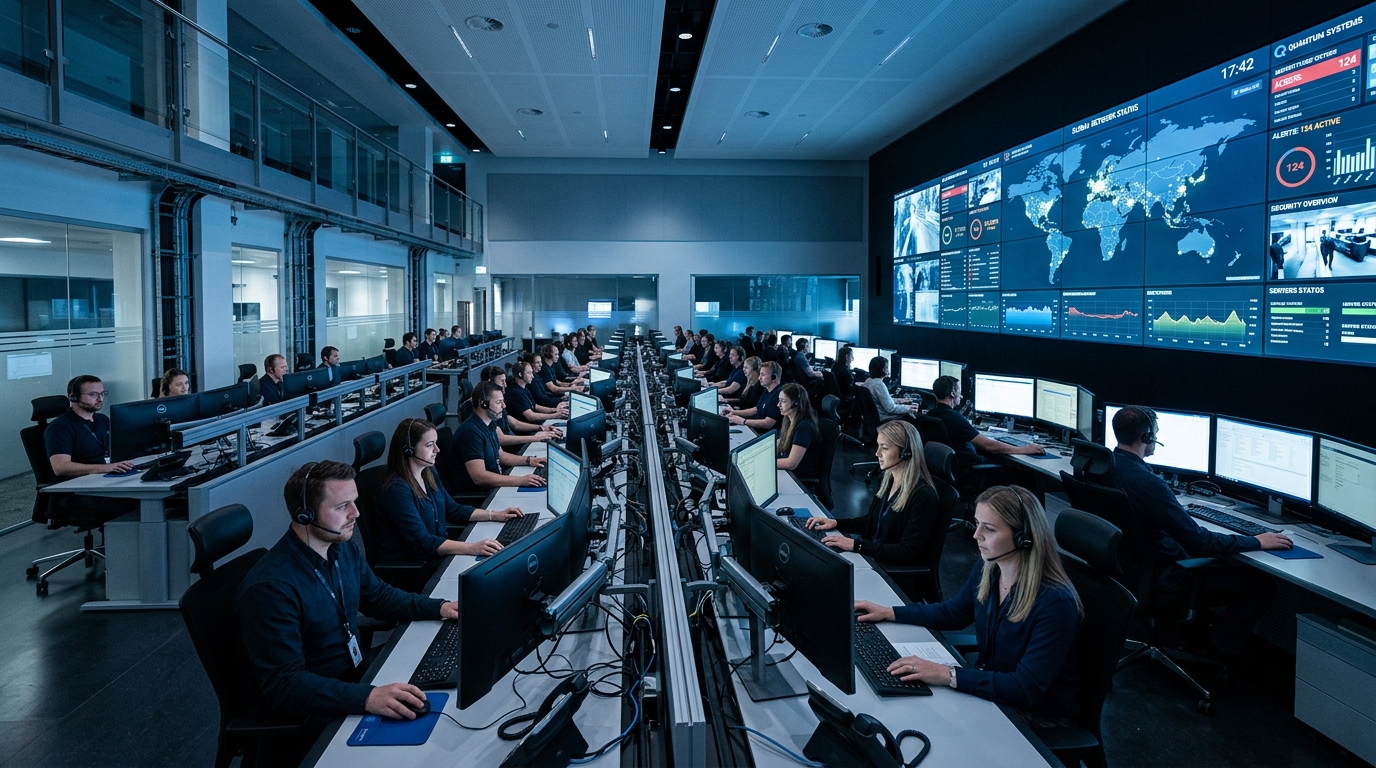
When the sensors detect a pattern consistent with a fall — a sudden downward acceleration followed by impact and a change in orientation — the device sends an automatic alert to the monitoring center. The operator connects through two-way voice to check on the wearer. If the wearer does not respond or confirms they need help, emergency services are dispatched.
The entire process from fall detection to operator connection typically takes 30 to 60 seconds, depending on the provider and the time needed to confirm the alert.
What Fall Detection Can and Cannot Detect
Understanding the limitations of fall detection is important for setting realistic expectations.
Fall detection works best for hard falls from a standing or walking position, falls that involve a clear change in height (standing to floor), forward, backward, and lateral falls with sudden impact, and falls on hard surfaces where the impact is distinct.
Fall detection is less reliable for slow falls such as sliding out of a chair or gradually sinking to the ground, fainting while already seated or lying down, falls into soft surfaces like a bed or couch that cushion the impact, and stumbles that are caught and do not result in hitting the ground.
No system on the market achieves 100 percent accuracy. Published detection rates range from 80 to 95 percent for hard falls, with false alarm rates declining steadily as sensor algorithms improve. Modern devices learn movement patterns over time and adjust sensitivity to reduce false positives.
Do You Need Fall Detection?
Fall detection is strongly recommended if your loved one has experienced one or more falls in the past year, takes medications that cause dizziness or lightheadedness, has a condition affecting balance such as Parkinson's disease or neuropathy, lives alone and might not be found quickly after a fall, or has cognitive impairment that might prevent them from pressing a help button.
If none of these risk factors apply, a standard medical alert system without fall detection may be sufficient. The manual help button still provides protection as long as the wearer is conscious and able to press it.
The Bottom Line
For most families, Bay Alarm Medical with fall detection on the SOS Micro or SOS Smartwatch is the best overall choice — fast response, reliable detection, and competitive pricing. If caregiver app integration matters, Medical Guardian is worth the premium. If you want fall detection included without an extra fee, LifeFone offers the best value. And if long battery life for an active senior is the priority, MobileHelp delivers.
Whatever you choose, adding fall detection for a parent at risk of falling is one of the most cost-effective safety investments you can make. At $10 per month or less, it costs a fraction of what a single fall-related emergency room visit would.